
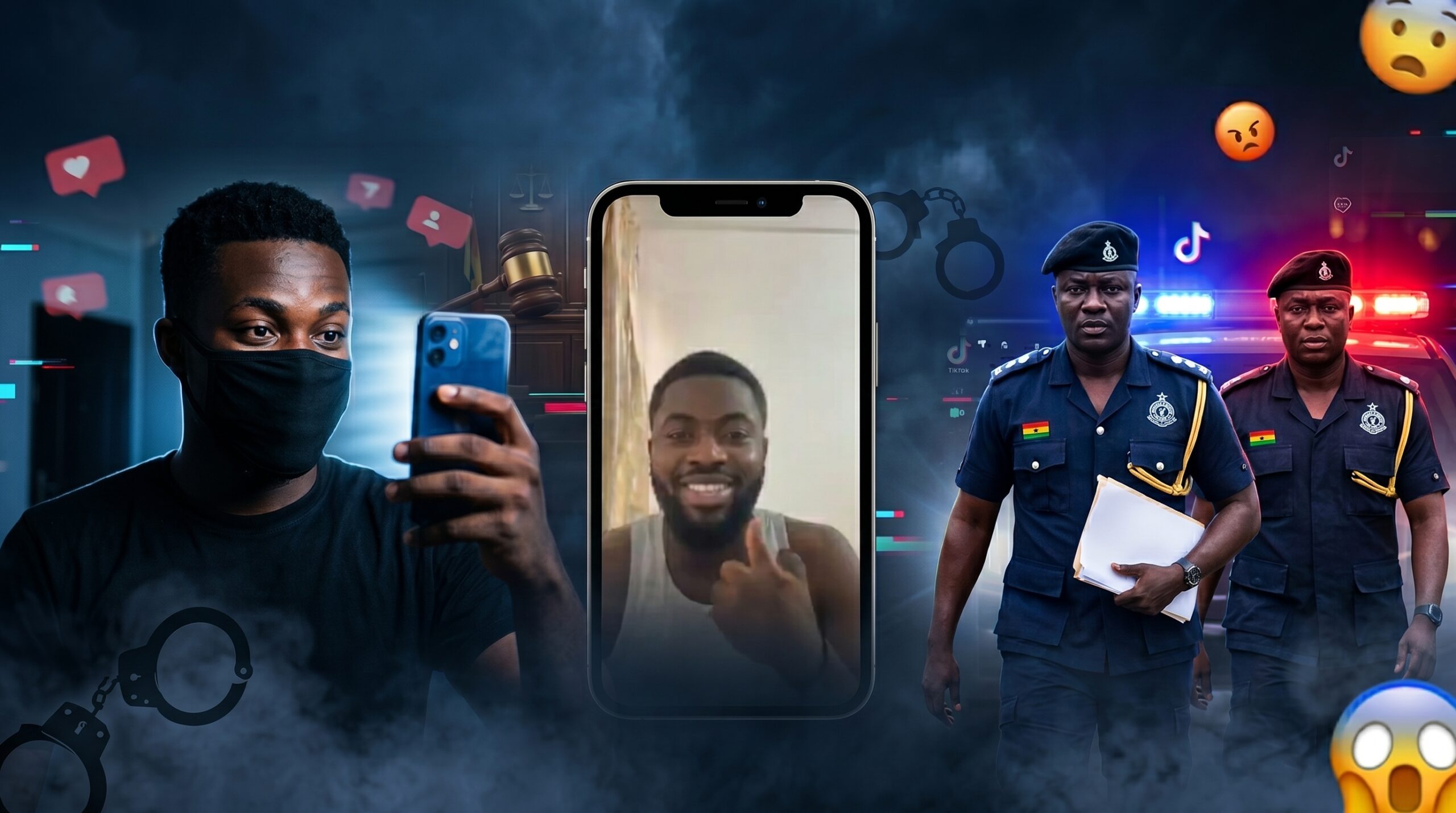
In today’s digital world, the line between entertainment and consequence is becoming increasingly blurred, as more young people find themselves facing real-world repercussions for content created in pursuit of online attention.
What begins as a few seconds of dramatic performance for social media can quickly escalate into legal trouble, public scrutiny, and lasting consequences. It is a growing reminder that in the age of virality, the internet is no longer just a platform for expression — it is also a permanent public record.
Across social media platforms, similar incidents continue to emerge. Individuals record provocative videos, make exaggerated claims, or issue inflammatory statements in an attempt to capture attention, gain followers, or spark online reactions.
To many creators, such videos may seem like harmless content or internet humour. But once posted publicly, the interpretation of that content is no longer controlled by the creator.
Legal experts and law enforcement agencies increasingly warn that online intent does not always determine legal consequence.
Authorities respond not to what a creator claims they meant, but to what was publicly communicated and how it could reasonably be interpreted.
This reality was recently highlighted in Ghana following an incident involving a young man whose viral video attracted widespread attention and ultimately led to his arrest.
The individual, whose face was initially concealed, appeared in a video making statements interpreted as threats toward security personnel. Although the video was later described by the creator as “just content,” law enforcement treated the statements as a matter of public concern.
A critical moment came when the individual briefly removed his mask at the end of the recording, allowing viewers to identify him.
Within hours, the video had circulated widely across social media platforms, drawing concern from members of the public and eventually attracting the attention of authorities.
What may have been intended as dramatic online performance quickly became the subject of official investigation.
Days later, the young man released a second video apologizing and explaining that his original post was never meant to be taken seriously.
However, by that stage, the situation had already moved beyond social media damage control.
Authorities proceeded with action, reinforcing a broader message: once online content appears to threaten public safety or order, it can no longer be dismissed as mere entertainment.
The incident reflects a wider challenge facing young people in the digital era — the increasing pressure to go viral.
Social media platforms reward visibility. The more shocking, controversial, or emotionally provocative the content, the greater its chances of spreading rapidly.
For many young creators, virality has become a form of social currency.
But experts caution that this pursuit often comes at a cost.
The speed at which information spreads online means consequences can arrive almost instantly.
A single post can be screenshotted, reshared, analyzed, and reported across multiple platforms within minutes.
In previous generations, careless words may have faded with time.
Today, digital content is preserved, searchable, and often admissible as evidence.
This shift has fundamentally changed the relationship between expression and accountability.
What once may have been dismissed as youthful recklessness can now trigger serious institutional response.
The issue goes beyond legal enforcement.
It also raises important questions about responsibility in an interconnected world.
Where does humour end and recklessness begin?
At what point does performance become liability?
And how should young people navigate a digital culture that often rewards controversy more than caution?
Observers say the answer lies in digital responsibility.
Freedom of expression remains a vital right, but that freedom does not remove accountability for what is expressed publicly.
The internet does not distinguish between “just for content” and genuine threat.
It processes what is posted, and institutions respond accordingly.
At its core, this is not merely a story about one viral video.
It is a reflection of a larger cultural shift — one where the desire for attention increasingly competes with common sense.
The lesson is clear: not everything that can be posted should be posted.
Not everything that trends is harmless.
And once content enters the public domain, it no longer belongs solely to its creator.
In the digital age, the consequences of a moment’s decision can outlast the attention it was meant to attract.
Because when content crosses certain lines, the internet may call it viral — but the law may call it something else entirely.