
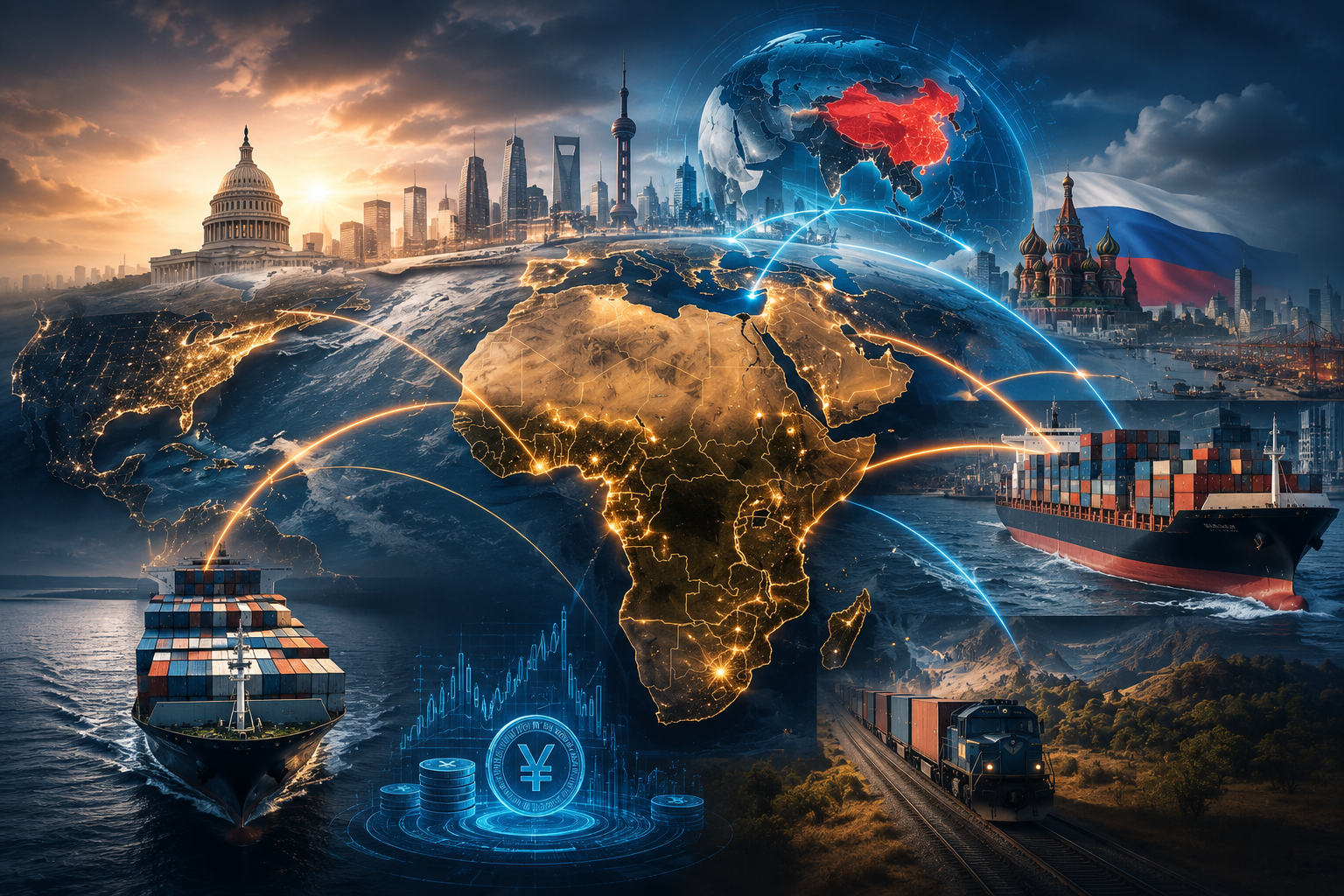
US Foreign Policy Faces Renewed Scrutiny as Global Alliances and Financial Systems Continue to Shift
The United States is facing growing questions about its global influence as geopolitical tensions in the Middle East, the rise of alternative financial systems, and expanding partnerships between African nations, China, and Russia continue to reshape the international order.
The debate has intensified following recent U.S. military involvement in the conflict involving Iran and President Donald Trump’s renewed focus on preserving American economic and geopolitical dominance. During previous remarks, Trump described the U.S. dollar’s status as the world’s reserve currency as a cornerstone of American power, warning that losing its dominance would be comparable to “losing a major world war.”
Recent developments, however, have fueled broader discussions among analysts over whether the global balance of power is gradually shifting.
One area receiving increased attention is international finance. China has continued expanding the use of its cross-border digital yuan payment infrastructure, which aims to facilitate international transactions outside the traditional SWIFT banking network. Financial observers view the initiative as part of Beijing’s long-term strategy to internationalize its currency and reduce dependence on the U.S. dollar.
The participation of financial institutions in Gulf nations, including Qatar and the United Arab Emirates, has drawn particular interest because of the region’s longstanding role in the dollar-based global energy market. While economists caution that the U.S. dollar remains the world’s dominant reserve currency, alternative payment systems are increasingly being viewed as part of a broader effort by several countries to diversify international financial transactions.
Meanwhile, geopolitical tensions in the Middle East continue to place additional pressure on Washington’s relationships with its regional allies. The ongoing conflict involving Israel and Iran has prompted calls from several Gulf states for de-escalation, underscoring the increasingly complex diplomatic environment facing the United States.
Beyond the Middle East, Africa has emerged as another key arena in the evolving global competition among major powers.
Over the past decade, China has significantly expanded its investments across the continent, financing infrastructure projects that include highways, railways, ports, hospitals, power facilities, and industrial developments. Russia has also strengthened security cooperation with several African governments through military partnerships, energy agreements, and mining investments.
These growing relationships have coincided with a broader push among some African governments to reduce dependence on traditional Western financial institutions and pursue alternative development models. Burkina Faso, under the leadership of Captain Ibrahim Traoré, recently announced a multi-year national development strategy that places greater emphasis on domestic financing and national resource mobilization. Similar approaches have previously been adopted in projects such as Ethiopia’s Grand Ethiopian Renaissance Dam, which relied heavily on domestic funding.
Trade policy has also become part of the conversation. While the United States has traditionally promoted trade through initiatives such as the African Growth and Opportunity Act (AGOA), China has expanded tariff reductions and eased visa requirements for many African countries, further strengthening its commercial ties with the continent.
Technology is increasingly viewed as another strategic battleground. Chinese companies continue expanding digital infrastructure across Africa, including satellite navigation systems, telecommunications networks, and digital payment platforms. At the same time, BRICS member states are exploring payment mechanisms that enable greater use of local currencies in cross-border trade, reducing reliance on dollar-denominated transactions.
Foreign policy analysts note that these developments do not necessarily signal an immediate decline in American global influence. The United States remains the world’s largest economy, the issuer of the primary global reserve currency, and one of the world’s leading military powers. However, many observers argue that the international system is becoming increasingly multipolar as emerging powers expand their influence in finance, technology, infrastructure, and diplomacy.
For Africa, the changing geopolitical landscape presents both opportunities and challenges. Governments across the continent are increasingly seeking to diversify their international partnerships while pursuing greater economic sovereignty and leveraging strategic resources to support long-term development.
As global competition intensifies, the central question is no longer whether international power dynamics are changing, but how countries—particularly in Africa—will position themselves within an increasingly competitive and interconnected world.