
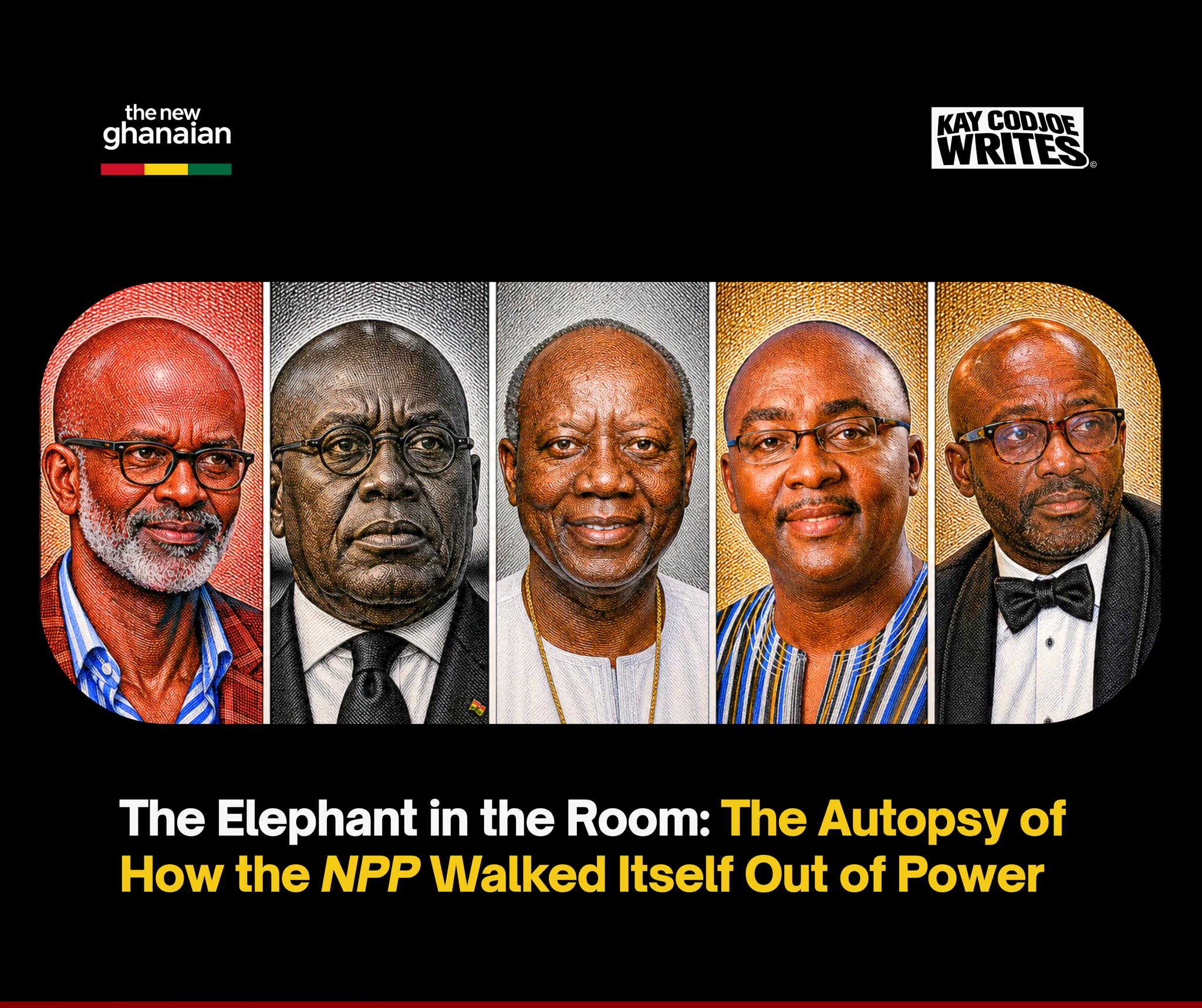
Accra, Ghana — Ghana’s 2024 general elections delivered a decisive setback for the New Patriotic Party (NPP), as analysts and observers point to widespread economic hardship, public frustration, and perceived political detachment as key factors behind the party’s loss.
Contrary to suggestions of a strong ideological shift toward the opposition National Democratic Congress (NDC), many political commentators argue that the election outcome was primarily a rejection of the incumbent administration’s performance over its eight-year tenure.
By the close of voting, the results reflected what some have described as a decisive public verdict rather than a competitive contest. While electoral losses are not uncommon in democratic systems, analysts suggest the scale and nature of the NPP’s defeat reveal deeper structural and political challenges within the party.
Early warning signs were evident as far back as the 2020 elections, when the NPP experienced a significantly reduced parliamentary majority. Observers at the time noted growing public dissatisfaction, particularly around economic management, once considered a cornerstone of the party’s appeal.
In the years that followed, Ghana faced mounting economic pressures. Rising inflation, currency instability, and increasing fuel prices placed considerable strain on households and businesses. The implementation of policies such as the Domestic Debt Exchange Programme (DDEP) further affected investors and pension holders, intensifying public concern.
Critics have also highlighted what they describe as a disconnect between government communication and citizens’ lived experiences. Official responses to economic challenges were often viewed as overly technical or insufficiently empathetic, with some arguing that public messaging failed to adequately address the severity of hardship faced by ordinary Ghanaians.
Environmental issues, including illegal mining (galamsey), also became symbolic of broader governance concerns. Reports of environmental degradation, coupled with perceived inconsistencies in enforcement, contributed to a narrative of selective accountability.
The NPP’s campaign transition from President Nana Akufo-Addo to then–Vice President Mahamudu Bawumia presented additional challenges. Analysts note that efforts to position Dr. Bawumia as a candidate of change were complicated by his association with the incumbent administration, creating a difficult balancing act during the campaign.
Meanwhile, the NDC capitalized on prevailing public sentiment with a campaign message centered on economic relief and national recovery, which resonated strongly with voters.
The election results were particularly stark in Parliament, where the NPP’s representation dropped significantly, leaving the party with a reduced minority presence. Political observers describe the outcome not only as a loss of power but also as a moment of internal reckoning for the party.
In the aftermath, internal divisions and debates have emerged within the NPP, with differing views on the causes of the defeat. While some party members attribute the loss to campaign strategy or communication failures, others argue that deeper issues—particularly governance and public trust—must be addressed.
Experts emphasize that the broader lesson extends beyond a single party. Ghana’s political landscape, they note, is evolving, with voters increasingly prioritizing economic conditions, accountability, and tangible outcomes over party loyalty.
As the NDC assumes governance, analysts caution that the same dynamics that contributed to the NPP’s defeat could pose risks for any administration that becomes disconnected from public sentiment.
The 2024 elections, therefore, may signal a shift in Ghanaian electoral behavior—one defined less by partisan allegiance and more by performance and responsiveness to citizens’ needs.
credit: Kay Codjoe